
A Hopefully Okay Post
REID #271

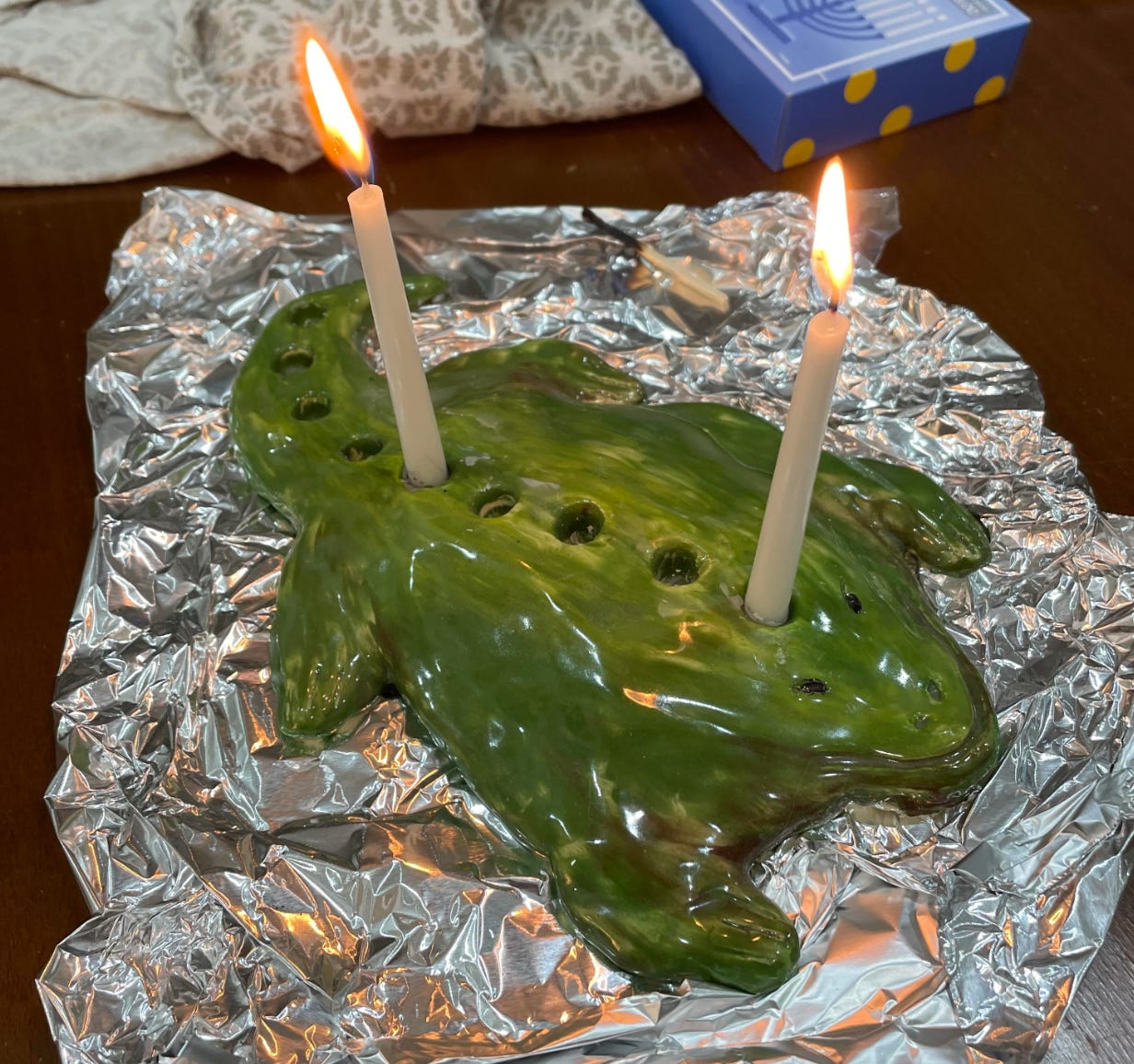
SHORT:
I had a really bad day,
and then my HelloFresh meal was
beans.
MEDIUM:
Thank you to everyone who commented, shared, texted, emailed, etc. re: last week’s post. Extra special shoutout to the 86 year old man named Maurice from the UK who somehow found my post and contacted me via the Substack chat function that I forgot existed1.
Despite winning the “endless positivity” award at work this week2, I am actually a huge bitch and world-class complainer with hot takes I have been given the advice to “lean into that more”. So that was what last week was.
BUT! Some people (13) said they missed Short/Medium/Long, so I’m bringing that back too and seeing if I can split the difference.
Sound off in the comments with your feedback/thoughts.
LONG:
Last week, someone stole a photo of a homemade pumpkin roll my partner had posted months ago in their Dull Vegan Facebook group and tried to pass it off as their own (including the caption). Girl, that is not your pumpkin roll!!! Why would you do that?????4 What does that give you?????
I’ve been thinking a lot about posting.
Despite being a Brown alum and Jewish, I didn’t post anything about the atrocious shootings in Providence and Bondi at first. Then I “felt weird” about not posting, so I shared a Brown mutual aid link. After that, I got really sad about Rob Reiner dying—for many reasons, but one big one was that he was bald and so confident about it!5 I, on the other hand, am going bald because of hormones and worry about how I’ll look, given my very big head (99th percentile6). But I obviously wasn’t going to post about that. I didn’t actually know Rob Reiner, or anyone hurt at Brown or Bondi. I didn’t want to “make things about me”.
I did get a fair number of texts from friends and family sending condolences and heart emojis (mostly about Brown). Which made me feel a little weird. I was disgusted by the events, but I was physically fine. I was eating garlic bread in Gowanus. Should I not have been?
When I got home from dinner, I clicked through Brown alumni (many nearly a decade out of school) crying on camera or posting photos. People who no longer live in Providence, who don’t know the students currently on campus, who are largely insulated from the material consequences of what happened. And I get it. Brown is a special place where many people experienced a real sense of belonging. These posts were less about the event itself, and more the shock of seeing violence rupture a place alums associate with safety, possibility, and becoming.
Growing up, I was similarly shaped and held by Jewish life. I have warm feelings when I think about going to synagogue and lighting Hanukkah candles. I saw a lot of Jewish folks posting about Bondi with understandable ferocity, even though they weren’t physically there.
In both cases, the feeling behind the posts was the same: that could have been me.
And I don’t think that’s necessarily bad. “We must not let ourselves become numb to things like this” (which is something I, of course, read that on someone’s story that I fear may be making me numb to things like this.)
As my wise friend said, just this morning: “What are you supposed to do, not process it? You eat a bad piece of food, you have to have diarrhea to get it out. The problem is, the algorithm just pushes all the things that normally would take us months to process and work through and shows us 50+ a day and the only way we can respond to these things is to post more stuff. So that’s just like… a lot of diarrhea.”
I will say, at least on my feed, that in the Brown context, the “that could’ve been me” posts carried many more implicit demands: this shouldn’t keep happening, and there are policy changes we can make to prevent this from happening in the future.
By contrast, in the posts about Bondi, “that could’ve been me” was often framed as confirmation. See? They hate us! This is what the world is like. This is what always happens to us. We were RIGHT. We are RIGHT.
I personally think this type of response is dangerous. It narrows care to people who look like us or believe in the same things as us, and perpetuates Jewish exceptionalism: the idea, deeply embedded in our religious narratives, communal storytelling, and (increasingly) our social media habits, that Jewish suffering is inevitable, never-ending, and exists apart from or above all other suffering. Something that, as Alissa Solomon writes, “prevents people from seeing beyond their own shivering skin to the torment of others—even when the authorities causing that torment do so in their name.”7 She wrote that about Jewish theater, which is obviously very different, but the dynamic (sadly) pervades most Jewish conversations.
A good portion of posts on my feed about Bondi were more about affirming anxiety than preventing harm or mourning the victims. If there were calls to action, many stopped short of solidarity. Of aligning with other targeted communities. Short of naming the systems that enable violence in the first place.
People can and should post whatever they want, but it quite frankly pisses me off that I have Jewish friends and relatives who never post about the genocide in Gaza, but reliably post about every attack on Jews (or abortion or gay rights), very harm that feels close enough (and comfortable? enough?) to touch. As if Gaza has nothing to do with them. As if Sudan doesn’t. But everything does. A real anti-fascist Jewish response can’t separate Jewish safety from Palestinian lives, from Muslim safety, from Black freedom.
On the day of the Bondi shooting, I quickly sent family members footage of Ahmed al Ahmed, the man who bravely intervened at Bondi, hoping (maybe naively) that it might interrupt the fascist reflex of SEE?!?!??! PEOPLE HATE US! And instead offer another story: not “we are alone,” but we keep each other alive.
Thank you for subscribing to this newsletter. Sometimes it’s funny, sometimes it’s not (like when ppl slip on ice). If you want, you can also check out the archives.
Sincerely,
Reid Pope
Song of the week:
Snack of the week: NOT BEANS
Don’t know much about Maurice, but he told me he’s published 2 books, and I clicked on his profile and it says (at least) one of them is about Angel Meadows, Peterloo, the cholera epidemic, and the scuttlers. I googled Angel Meadows and it, I guess, refers to “a notorious, densely packed Victorian slum in Manchester, England, known as “hell on earth” by Friedrich Engels for its extreme poverty, disease (cholera, typhoid), crime, and mass pauper burials, now a regenerated park (St. Michael’s Flags) that became famous again with the 2010 discovery of an unidentified woman’s skeleton, dubbed the ‘Angel of the Meadow’.” I’d love to learn more, Maurice. Send me a copy!
Last year, I won best overall vibes, and my family laughed out loud when they heard this.
Person whose opinion I value a lot!
It’s not even autumn anymore! Pumpkin rolls are an autumn food!
Watched a video of him talking about this :)
My mom tells everyone about this and how she birthed myself and my two siblings (who also have 99 percentile heads) the old-fashioned way, no C-section.
I love your posts! My son (22 years old) has voiced several times some similar opinions to what you wrote-it's become "deeply embedded in our religious narratives, communal storytelling, and (increasingly) our social media habits, that Jewish suffering is inevitable, never-ending, and exists apart from or above all other suffering." And those narratives come from we Boomers. Gen Z doesn't see it that way at all. In fact many see it as generational guilt that we hang onto. Maybe it is, but it sure does seem that we get scape-goated more than other ethnic groups.
love short/medium/long